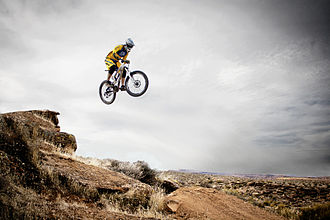
Mountain Biking
Uttarakhand’s diverse terrain offers several challenging routes for mountain biking. A very popular sport in the state, there are trails for beginners and professionals alike. In fact, the annual Ultimate Mountain Terrain Biking Championship, which is said to be Asia’s longest mountain bike race, is held here and draws participants from across the world.
Mountain biking is a sport of riding bicycles off-road, often over rough terrain, usually using specially designed mountain bikes. Mountain bikes share similarities with other bikes but incorporate features designed to enhance durability and performance in rough terrain, such as air or coil-sprung shocks used as suspension, larger and wider wheels and tires, stronger frame materials, and mechanically or hydraulically actuated disc brakes. Mountain biking can generally be broken down into five distinct categories: cross country, trail riding, all mountain (also referred to as “Enduro”), downhill, and freeride.
This sport requires endurance, core strength and balance, bike handling skills, and self-reliance. Advanced riders pursue both steep technical descents and high incline climbs. In the case of freeride, downhill, and dirt jumping, aerial maneuvers are performed off both natural features and specially constructed jumps and ramps.
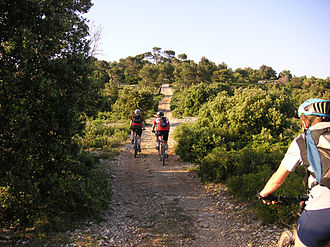
Mountain bikers ride on off-road trails such as singletrack, back-country roads, wider bike park trails, fire roads, and some advanced trails are designed with jumps, berms, and drop-offs to add excitement to the trail. Riders with enduro and downhill bikes will often visit ski resorts that stay open in the summer to ride downhill-specific trails, using the ski lifts to return to the top with their bikes. Because riders are often far from civilization, there is a strong element of self-reliance in the sport. Riders learn to repair broken bikes and flat tires to avoid being stranded. Many riders carry a backpack, including water, food, tools for trailside repairs, and a first aid kit in case of injury. Group rides are common, especially on longer treks. Mountain bike orienteering adds the skill of map navigation to mountain biking.
Risk
Risk of injury is present when mountain biking, especially in the more extreme disciplines like downhill biking, free ride and dirt jumping. Injuries range from minor wounds, such as cuts and abrasions from falls on gravel or other surfaces, to major injuries such as broken bones, head or spinal injuries resulting from impacts with rocks, trees or the terrain being ridden on. Another risk factor is that mountain biking often takes place in wilderness or remote areas so emergency response can be delayed in the event of sustained injury.
Protective equipment can protect against minor injuries and reduce the extent or seriousness of major impacts, but may not protect a rider from major impacts or accidents. To reduce the risk of injury, a rider will also take steps to minimize the risk of accidents, and thus the potential for injury; by choosing trails which fall within the range of their experience level, ensuring that they are fit enough to deal with the trail they have chosen, and keeping their bike in top mechanical condition.
Lastly, maintenance of the rider’s bike is carried out more frequently for mountain biking than for utility cycling or casual commuter biking. Mountain biking places higher demands on every part of the bike. Jumps and impacts can crack the frame or damage components or the tire rims, and steep, fast descents can quickly wear out brake pads. Since the widespread adoption of hydraulic and mechanical disk brakes on most mountain bikes from the late 1990s, the issues of brake pad wear, misalignment with, or slippage of rim brake pads on rims designed for rim brakes or “V brakes”, has become a non-issue. Thus, whereas a casual rider may only check over and maintain their bike every few months, a mountain biker will check and properly maintain the bike before and after every ride.
Advocacy organizations
Mountain bikers have faced land access issues from the beginnings of the sport. Some areas where the first mountain bikers have ridden have faced extreme restrictions or elimination of riding.
This opposition has led to the development of local, regional, and international mountain bike groups. The different groups that formed generally work to create new trails, maintain existing trails, and help existing trails that may have issues. Groups work with private and public entities from the individual landowner to city parks departments, on up through the state level at the DNR, and into the federal level. Different groups will work individually or together to achieve results.
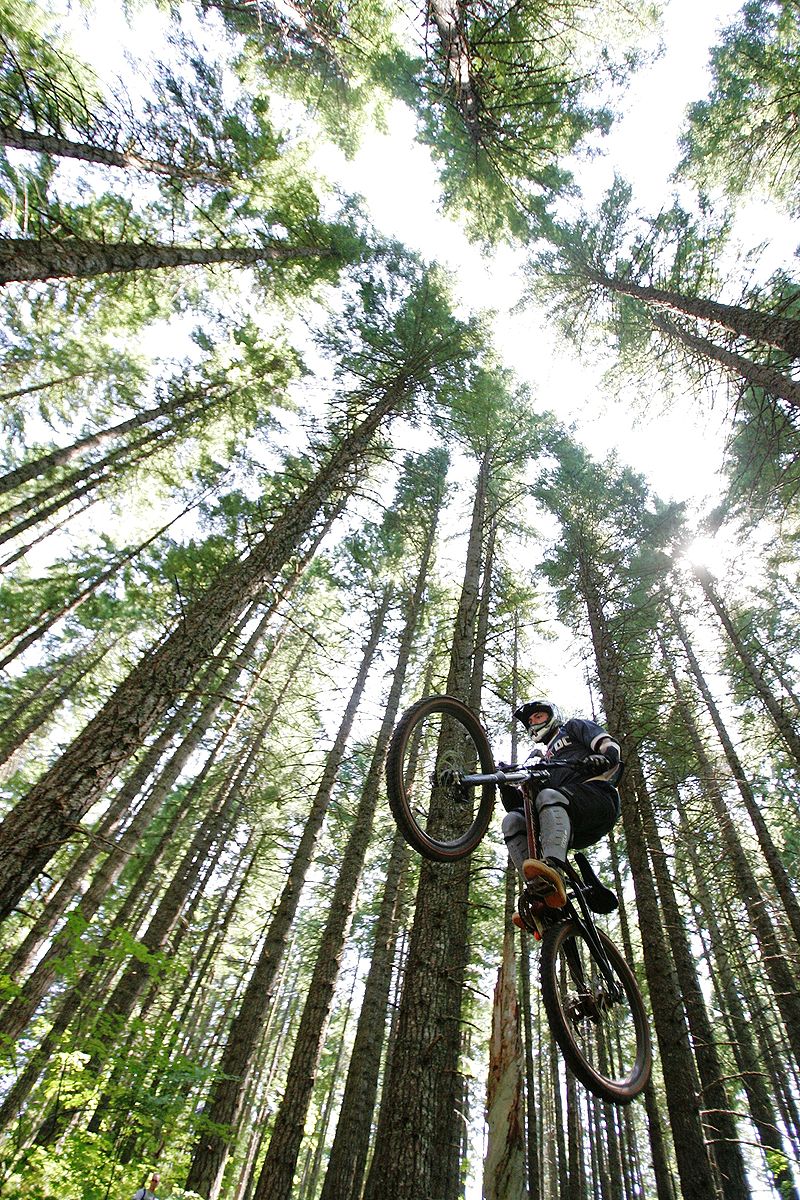
Advocacy organizations work through numerous methods such as education, trail workdays, and trail patrols. Examples of the education an advocacy group can provide include: Educate local bicycle riders, property managers, and other user groups on the proper development of trails, and on the International Mountain Bicycling Association‘s (IMBA), “Rules of the Trail.” Examples of trail work days can include: Flagging, cutting, and signing a new trail, or removing downed trees after a storm. A trail patrol is a bike rider who has had some training to help assist others (including non-cyclists), trail users.
The IMBA is a non-profit advocacy group whose mission is to create, enhance and preserve trail opportunities for mountain bikers worldwide. IMBA serves as an umbrella organization for mountain biking advocacy worldwide and represents more than 700 affiliated mountain biking groups. The group was originally formed to fight widespread trail closures. In 1988, five California mountain bike clubs linked to form IMBA. The founding clubs were: Concerned Off-Road Bicyclists Association, Bicycle Trails Council East Bay, Bicycle Trails Council Marin, Sacramento Rough Riders, and Responsible Organized Mountain.